Updated 11 October 2026
Most leopard geckos do not need a humidifier. They come from the dry grasslands and rocky scrub of Afghanistan, Pakistan and northwest India. The rest of the tank should stay at about 30 to 40% humidity. What they do need is a humid hide: a small, enclosed hide lined with damp moss that holds 70 to 80% humidity, so your gecko can shed cleanly. A reptile humidifier only helps in a few cases, such as a very dry house in winter or a gecko that keeps getting stuck shed even with a good humid hide.
This guide covers the humidity levels to aim for, how to measure them, when a humidifier is worth buying, and which ones we recommend if you do need one.
What humidity does a leopard gecko need?
| Where | Target humidity | How to achieve it |
|---|---|---|
| Main enclosure (ambient) | 30 to 40% | Good ventilation (screen top), dry substrate, a shallow water bowl |
| Humid hide | 70 to 80% | An enclosed hide lined with damp sphagnum moss or paper towel, re-wetted every few days |
| Short spikes | Up to about 60% | Fine if the tank is well ventilated and dries back down within a few hours |
These ranges follow the ReptiFiles leopard gecko humidity guide, which also warns that raising humidity across the whole enclosure "can actually make your gecko sick". Damp, stagnant air is linked to respiratory infections and skin problems in desert species, so more humidity is not better.
The humid hide matters more than a humidifier
A humid hide gives your gecko a damp spot to choose when it needs one, mostly in the days before a shed. Place it on the middle-to-cool side of the tank. Line it with sphagnum moss, coconut fibre or paper towel, and dampen it so it is moist but not dripping. Swap the lining when it starts to smell or grow mould. Our leopard gecko humid hide guide covers the best hides, what to fill them with and how to make your own.
- Humid hide: any enclosed cave with one small entrance works. Purpose-made reptile humid hides are easy to clean. See humid hides on Amazon
- Sphagnum moss: holds moisture for days and is safe if your gecko nibbles a strand. See sphagnum moss on Amazon
- Digital hygrometer with probe: the only way to know your real numbers. Dial gauges are often 10 to 20 points out. See digital hygrometers on Amazon
Signs the humidity is wrong
| Too dry | Too humid |
|---|---|
| Stuck shed on toes, tail tip or around the eyes | Condensation on the glass or walls |
| Patchy, incomplete sheds | Damp substrate and mould |
| Sunken eyes or wrinkled skin, which can also mean dehydration | Wheezing, bubbles at the nose or open-mouth breathing (see a reptile vet) |
| Ambient reading below about 20% for days at a time | Ambient reading above 50% most of the day |
Stuck shed on the toes is the most common problem. Left alone it can cut off blood flow and cost a toe, so fix the humid hide first. Our guide to how often leopard geckos shed covers what a healthy shed looks like.
When a humidifier does make sense
- Your hygrometer reads below about 20% for most of the day, usually in winter with central heating or in a desert climate.
- Your gecko gets stuck shed again and again, even with a well-kept humid hide.
- You keep other reptiles in the same room that need higher humidity.
Even then, a small room humidifier that raises the whole room a little is often a better fit than a fogger piped into the tank. If you use a reptile fogger, run it on a timer or humidistat for short bursts, point it at the humid hide end, and let the tank dry out between runs. Always use distilled water so minerals don't build up.
Best humidifiers for leopard gecko tanks
If you have decided you need one, these are the reptile humidifiers we would look at. All are ultrasonic cool-mist foggers with adjustable output and an extension hose.
| Humidifier | Tank | Best for | |
|---|---|---|---|
| Zoo Med ReptiRain fogger | 1 litre | Pairing with a humidistat for precise control | Check price |
| Evergreen Pet Supplies reptile fogger | 2 litres | Quiet everyday use with auto shut-off | Check price |
| BETAZOOER reptile humidifier | 2.5 litres | Larger enclosures, longer run time | Check price |
| PetsPioneer reptile fogger | About 3 litres | Fewest refills, built-in timer | Check price |
| OIIBO reptile humidifier | 2.2 litres | Twin outlets for two enclosures | Check price |
Zoo Med ReptiRain fogger
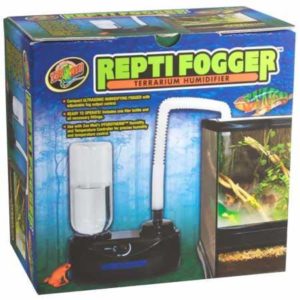
Zoo Med's compact fogger comes with a 1 litre bottle with a no-spill valve and adjustable fog output. It is designed to work with Zoo Med's HygroTherm humidity and temperature controller, which switches it on and off at the level you set. That makes it the easiest option to keep within a safe range. The small bottle needs refilling more often than the others.
Evergreen Pet Supplies reptile fogger
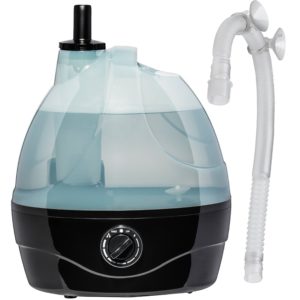
A 2 litre tank, adjustable output, a hose that extends from 1.5 to 5 feet, and dry-run protection that turns it off when the water runs out. It is quiet enough for a bedroom. The manufacturer recommends running it on a timer or humidistat so the tank gets a rest period, which is exactly how it should be used for a leopard gecko.
BETAZOOER reptile humidifier
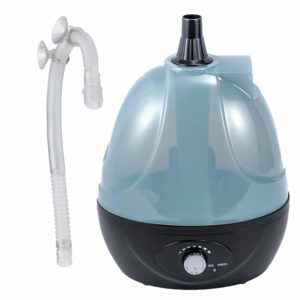
The 2.5 litre tank and 150 to 320 ml per hour output suit a larger enclosure or a room with several tanks. It has auto shut-off and two suction cups to hold the hose in place. Turn the output to the lowest setting for a leopard gecko.
PetsPioneer reptile fogger
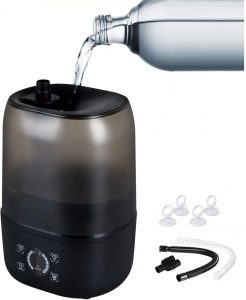
The largest tank here runs for about 12 hours on high and 24 hours on low, and the manufacturer quotes under 30 dB when running. It has auto shut-off and a 1.3 to 5.3 foot hose. The big tank means fewer refills, but for a leopard gecko you will mostly run it in short timed bursts.
OIIBO reptile humidifier
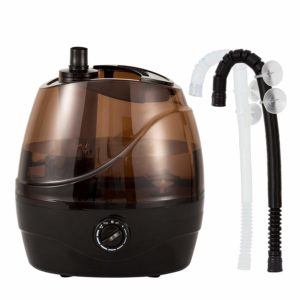
A 2.2 litre tank that refills from the bottom, 250 to 350 ml per hour output, and a double-port adapter so one unit can feed two hoses. It is useful if you keep a leopard gecko next to a species that needs more humidity.
Leopard gecko humidity FAQ
Do leopard geckos need a humidifier?
Usually not. Keep the main tank at 30 to 40% humidity and give your gecko a humid hide at 70 to 80%. A humidifier only helps if your home is very dry, below about 20%, or sheds keep going wrong despite a good humid hide.
What humidity should a leopard gecko tank be?
Aim for 30 to 40% across the enclosure, with a humid hide that holds 70 to 80%. Short rises above that are fine as long as the tank is ventilated and dries out again.
Can high humidity hurt a leopard gecko?
Yes. Leopard geckos are a dry-climate species, and constantly damp air raises the risk of respiratory infections and skin problems. Watch for condensation, mould and wheezing, and see a reptile vet if your gecko has trouble breathing.
Do leopard geckos need a dehumidifier?
Rarely. If the tank is too humid, better ventilation (a screen top), drier substrate and a smaller water bowl usually fix it. A room dehumidifier only helps in a very damp house.
How do I measure humidity in a leopard gecko tank?
Use a digital hygrometer with a probe placed at gecko level on the cool side. Check the humid hide separately. Cheap dial gauges are often badly out and are not worth relying on.
For the rest of the setup, see our leopard gecko tank guide and the full leopard gecko care sheet.